There are days when saying Alhamdulillah feels effortless, and there are days when it feels like a word we say before the heart has arrived. Yet gratitude in Islam is not merely a pleasant mood. It is a form of worship, a way of seeing, and a daily return to the truth that every breath, every hidden protection, every opened door, and even every closed one is held by Allah.
One of the most beautiful authentic duas for gratitude is short enough to memorize, yet deep enough to reshape an entire life:
اللَّهُمَّ أَعِنِّي عَلَى ذِكْرِكَ وَشُكْرِكَ وَحُسْنِ عِبَادَتِكَ
Allāhumma aʿinnī ʿalā dhikrika wa shukrika wa ḥusni ʿibādatik
O Allah, help me to remember You, to thank You, and to worship You in the best manner. (Abu Dawud 1522 — taught by the Prophet ﷺ to Muʿadh ibn Jabal to say after every prayer)
Why this dua for gratitude begins with help
Notice the first word of need: help me. This dua to thank Allah does not assume that gratitude is easy, automatic, or dependent on having a perfect life. It teaches us that even shukr requires divine support. We need Allah to help us remember Him, because forgetfulness is one of the great diseases of the heart. We need Allah to help us thank Him, because blessings can become familiar until we stop noticing them. We need Allah to help us worship Him beautifully, because gratitude is not complete until it shapes how we live.
This is why shukr in Islam is not only a feeling of appreciation. It is recognition, praise, humility, and obedience. The tongue says Alhamdulillah. The heart admits, “This was not from me alone.” The body responds by using the blessing in a way that pleases Allah. If Allah gives you knowledge, gratitude is to seek truth and teach with sincerity. If He gives you health, gratitude is to protect it and use it in worship. If He gives you time, gratitude is to stop treating it as if it belongs to you without accountability.
Shukr is a daily practice, not a mood
Many of us wait to feel grateful before we practice gratitude. Islam gently reverses that order. We practice gratitude so the heart can wake up. Like prayer, fasting, or dhikr, gratitude has discipline in it. It asks us to pause when the soul wants to complain, to name blessings when the mind wants to compare, and to say Alhamdulillah not as a decorative phrase but as a confession of reality.
This matters especially for Muslim women who are carrying quiet responsibilities. You may be studying, working, parenting, healing, serving family, managing emotions, and trying to stay close to Allah in the middle of it all. Some blessings are obvious, but others are hidden inside endurance: the strength to continue, the lesson in a delay, the protection in a rejection, the softness that remains in your heart after disappointment. Gratitude in Islam does not deny pain. It refuses to let pain become the only narrator.
When you say Alhamdulillah like you mean it, you are not pretending that everything is easy. You are saying that Allah is still worthy of praise in every state. You are anchoring the heart in Him rather than in the changing weather of circumstances.
Authentic duas of thanks and what they teach us
The dua above is one of the most direct and authentic supplications for gratitude because it gathers three foundations of spiritual life: remembrance, thankfulness, and excellent worship. It is especially powerful after prayer, when the heart has already stood before Allah and is more ready to be honest. Instead of rushing back into noise, this dua lets you ask for the inner ability to live what you just prayed.
There are also well-known prophetic teachings that encourage praising Allah after eating, drinking, waking, receiving blessings, and seeing goodness. Even when we do not quote every text in full, the pattern is clear: a believer’s day is meant to be stitched with praise. Gratitude is not reserved for major life events. It belongs after a glass of water, a safe journey, a peaceful hour, an answered message, a sincere conversation, and a moment when your heart chose patience instead of resentment.
If you are building a personal practice, you may find it helpful to keep a record of your supplications, reflections, and answered prayers. This guide on how to keep a dua journal can help you turn scattered thoughts into a steady act of worship.
Micro-moments of gratitude through the day
A meaningful gratitude practice does not need to be dramatic. In fact, the most transformative form is often quiet and repeated. Begin when you wake up. Before reaching for your phone, notice that your soul was returned, your body was carried through the night, and a new day was granted. Say Alhamdulillah slowly enough for the word to land.
When you make breakfast, notice provision. Not only the food itself, but the chain of mercy behind it: the hands that harvested, transported, stocked, prepared, and served. When you leave home, notice safety. When you work or study, notice the ability to focus. When you feel tired, notice that tiredness often points to something you were able to do. When you are interrupted, notice the invitation to refine patience. When a plan changes, notice the chance to renew your niyyah.
One powerful micro-practice is to attach gratitude to ordinary transitions. Before opening a door, say Alhamdulillah for shelter. Before sending a message, say Alhamdulillah for connection. Before beginning a task, say Alhamdulillah for the ability to contribute. Before sleeping, say Alhamdulillah for whatever Allah protected you from without your knowledge.
Comparison can interrupt this practice, especially when someone else seems to be receiving what you wanted. If jealousy rises, do not shame yourself into silence. Bring it to Allah and transform it. These duas for when you feel jealous can help you turn comparison into gratitude, trust, and a cleaner heart.
A three-line gratitude journaling habit
Journaling is not a replacement for dua, prayer, or action, but it can become a mirror for the heart. A three-line habit is simple enough to maintain and deep enough to reveal patterns. Each evening, write three lines. First: “Today, I thank Allah for...” and name one specific blessing. Second: “This blessing teaches me...” and reflect on what it reveals about Allah’s care, your dependence, or your responsibility. Third: “I will show gratitude by...” and choose one small action.
For example: “Today, I thank Allah for a difficult conversation that ended gently.” “This blessing teaches me that hearts can soften when Allah allows.” “I will show gratitude by making dua for that person and guarding my tongue.” This is gratitude moving from word to insight to action.
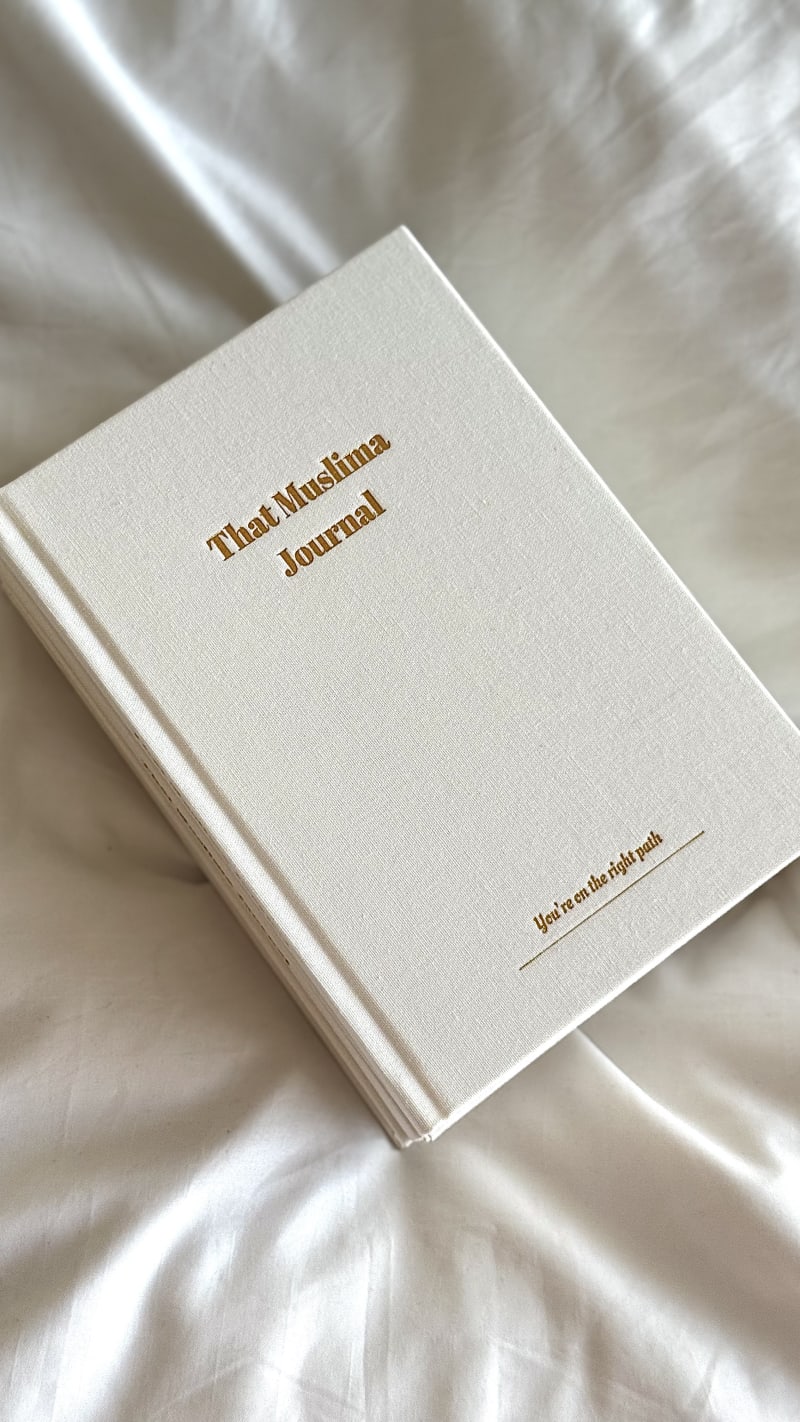
The That Muslima Journal was created for this kind of intentional inner work: the kind where muhasaba, dua, gratitude, and growth meet on the page. Used with sincerity, a journal can help you notice blessings you used to pass by and recognize answered duas you might have forgotten.
Saying Alhamdulillah with presence
To say Alhamdulillah like you mean it, slow down. Let the tongue lead the heart when the heart feels numb. Let the heart follow the tongue until gratitude becomes more than a reflex. Ask Allah to help you thank Him, because the ability to be grateful is itself a blessing that deserves gratitude.
And when life feels heavy, do not think gratitude means you must minimize your pain. You can cry and still say Alhamdulillah. You can be waiting and still say Alhamdulillah. You can be healing and still say Alhamdulillah. The believer’s gratitude is not shallow optimism. It is trust with depth. It is the knowledge that Allah gives, withholds, delays, replaces, teaches, and heals with wisdom far beyond what we can see.
Make the dua after prayer. Catch the small mercies during the day. Write three honest lines at night. Over time, gratitude becomes less of a mood you chase and more of a home your heart learns to return to.