Ramadan changes the rhythm of a workday in ways that are deeply spiritual, quietly physical, and often invisible to the people around you. You may still be expected to attend morning meetings, answer messages quickly, meet deadlines, commute, lead, listen, and perform with the same energy as any other month. Yet your body is fasting, your sleep may be lighter, your evenings may be fuller, and your heart may be trying to stay close to Allah through dua, dhikr, Quran, prayer, and sincere self-reflection.
This is where a Ramadan work journal becomes more than a planner. It becomes a private place to notice your limits without shame, organize your responsibilities with wisdom, and return to your niyyah when the office pace begins to pull you away from presence. For Muslim women balancing fasting, meetings, and fatigue, journaling can offer a gentle but powerful reset for both productivity and the soul.
Why Ramadan Workdays Feel Different in English-Speaking Office Culture
In many English-speaking office environments, the workday is structured around assumptions that do not always fit Ramadan. Coffee breaks, lunch meetings, team snacks, after-work gatherings, and fast-paced afternoon deadlines are often treated as normal parts of professional life. Even when colleagues are kind, the culture itself may not understand what it means to work while fasting from dawn to sunset.
One of the hardest parts is that fasting is not always visible. Your calendar may look ordinary, but your internal state is different. You may be managing thirst during a long presentation, brain fog in the afternoon, or emotional sensitivity after a short night of sleep. You may also be carrying the spiritual hope of Ramadan: wanting this month to be meaningful, not simply survived.
A thoughtful Ramadan workweek routine does not pretend you have unlimited energy. It helps you steward the energy you do have. It invites you to ask: What must be done with excellence? What can be simplified? What needs to be protected? What can wait? This is not laziness. It is wise self-leadership during a sacred month.
Journaling Prompts for Energy, Focus, and Emotional Steadiness
Before the workday begins, take five quiet minutes with your journal. This is not about writing pages of perfect reflections. It is about orienting your heart and mind before the demands of the day begin speaking loudly. A fasting at work journal can help you notice your needs early, rather than only after you feel overwhelmed.
Begin with energy. Write: Today, my energy is likely to be strongest at this time. Then write: My energy may dip at this time, so I will protect it by doing this. This simple prompt turns awareness into planning. If your sharpest hours are between 8:30 and 11:00 in the morning, do not spend them only clearing low-value emails if you have strategic work to complete.
Then journal for focus. Ask yourself: What are the three tasks that would make today feel complete? Not impressive. Not overloaded. Complete. Ramadan often teaches us to distinguish between what is necessary and what is excessive. Your workday can carry that same lesson.
Finally, journal for emotional steadiness. Write: If I feel irritable, tired, or unseen today, I will respond with this value. Perhaps your value is patience, clarity, gentleness, or honesty. Add a short dua in your own words, asking Allah to place calm in your speech and sincerity in your effort. This small act can soften the space between fatigue and reaction.
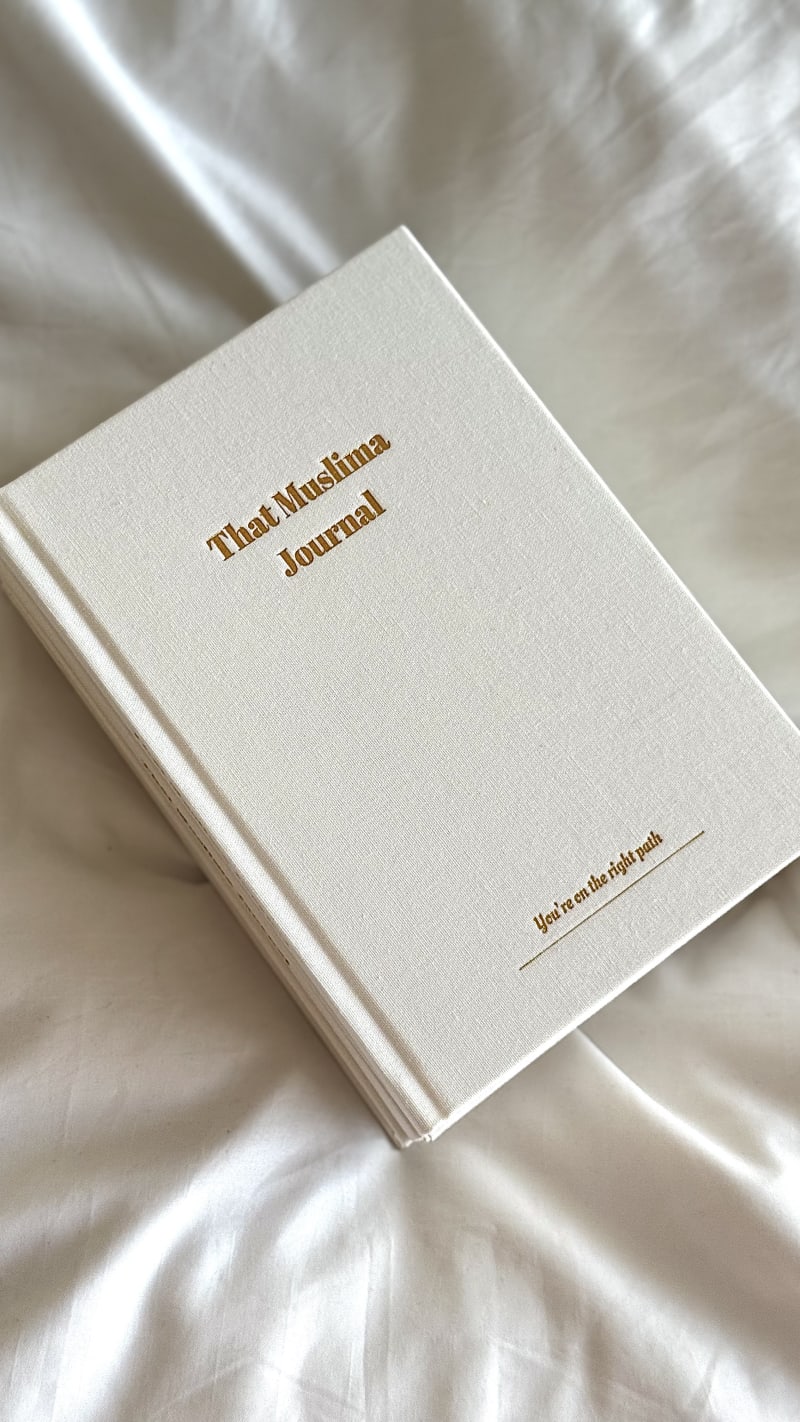
The That Muslima Journal was created for this kind of inner work: the meeting point between practical planning and spiritual accountability. It gives Muslim women room to reflect, reset, and build a life that honors both worldly responsibilities and the Hereafter.
How to Plan Around Lunch Breaks, Deadlines, and Low-Energy Hours
During Ramadan, your lunch break can become one of the most underused blessings of the workday. Since you are not eating, it may be tempting to keep working through it. But that can quietly drain you. Instead, use that time as a protected reset. Step away from your screen. Pray if the time has entered. Read a small portion of Quran. Take a short walk if your body can manage it. Sit in silence. Let your nervous system remember that you are not a machine.
In your journal, create a daily work map. Divide the day into three zones: high-focus, maintenance, and gentle close. High-focus hours are for the work that requires decision-making, writing, analysis, presenting, or leadership. Maintenance hours are for emails, updates, admin tasks, and follow-ups. Gentle close is for preparing tomorrow, reviewing notes, and reducing loose ends.
For many fasting women, high-focus work is best placed earlier in the day. If possible, schedule demanding tasks before the afternoon dip. If you control your calendar, avoid placing your most complex meeting late in the day. If you do not control your calendar, prepare for those meetings earlier by writing the key points, questions, and decisions you need to communicate.
Deadlines also need a Ramadan lens. Instead of asking, Can I technically finish this by then? ask, Can I finish this well while fasting, praying, and preserving my health? That question is central to Ramadan productivity for Muslim women. It respects your ambition without sacrificing your well-being.
At the start of the week, write a simple Ramadan workweek reset: one major work priority, one spiritual priority, one boundary, and one thing you will intentionally release. The release matters. You cannot carry every expectation at full speed during a month designed to refine you, not exhaust you.
Scripts for Protecting Your Boundaries Without Awkwardness
Many Muslim women hesitate to name their needs at work because they do not want to seem difficult, less capable, or overly sensitive. But boundaries can be calm, professional, and clear. You do not need to overexplain your worship or your body. You can communicate with dignity.
For lunch meetings: 'Thank you for including me. Since I am fasting for Ramadan, I will join the discussion but will not be eating. I am still happy to contribute to the meeting.'
For late afternoon scheduling: 'Would it be possible to schedule this earlier in the day? I am observing Ramadan, and my focus is usually stronger in the morning.'
For after-work events: 'I appreciate the invitation. During Ramadan, my evenings are reserved for worship and breaking my fast, so I will not be able to attend this time.'
For unrealistic deadlines: 'I want to complete this carefully. Given the current timeline and my existing priorities, I can deliver the first part by this date and the final version by this date.'
For needing a short pause: 'I am going to take a brief break and will return to this with better focus shortly.'
Notice that these scripts are not apologetic. They are respectful, specific, and grounded. Journaling them before you need them can reduce anxiety in the moment. You can even write your own boundary sentence at the top of each workday: Today, I am allowed to protect my focus without guilt.
A Gentle Evening Reset After a Demanding Workday
When the workday ends, it is easy to rush straight into the next set of responsibilities: preparing for iftar, caring for family, commuting, replying to messages, or trying to catch a few minutes of rest. But a gentle evening reset can help you transition from performance back into presence.
Before sunset, if you have a few minutes, open your journal and write three lines. First: What did I carry today? Second: Where did Allah help me? Third: What can I leave behind before iftar? This is a form of muhasaba, not self-criticism. It helps you notice the mercy that was present even in a difficult day.
After iftar and prayer, return to your journal with softness. Do not turn it into another task to complete. Write one honest sentence about your body, one about your heart, and one about tomorrow. For example: My body needs sleep more than scrolling. My heart felt most peaceful after dhikr. Tomorrow, I will prepare my meeting notes before noon.
This evening rhythm creates closure. Without it, work stress can follow you into worship and family time. With it, you give your mind a place to unload and your soul a place to remember. You are not only trying to be productive in Ramadan. You are trying to be present, sincere, and connected to Allah while still fulfilling the trust of your work.
Ramadan at work will not always feel graceful. Some days will feel slow, foggy, or emotionally stretched. But with a clear journal practice, compassionate planning, and honest boundaries, you can move through the month with more steadiness. Your fasting is not an obstacle to your professional life; it is a sacred act shaping the way you show up in it.
Let your journal become a witness to that effort. Let it hold the tired mornings, the quiet victories, the protected breaks, the sincere dua, and the small decisions that bring your work back under your worship. This is the heart of a Ramadan work journal reset: not doing more, but doing what matters with intention.