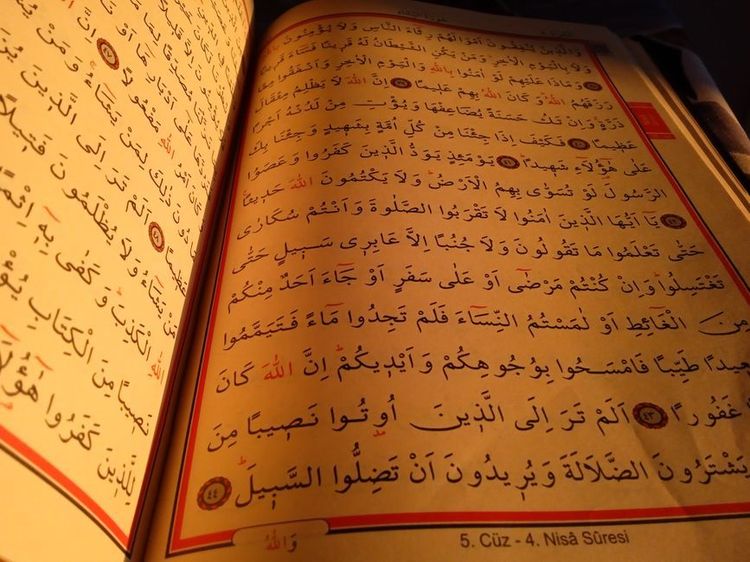
Some evenings arrive gently. Others arrive after a day that has asked too much of you: work, children, errands, messages, cooking, cleaning, decision-making, and the quiet emotional labor that many Muslim women carry without announcement. On those nights, opening the Quran can feel both deeply desired and strangely difficult. You want closeness to Allah, yet your mind is crowded and your body is tired.
This is where a Surah Al-Mulk reflection journal can become more than a notebook. It can become a soft landing place: a way to meet the Quran with sincerity, even when your energy is limited. Instead of turning evening worship into another demanding task, journaling can help you read slowly, notice meaning, and respond from the reality of your life.
Surah Al-Mulk is often associated with the night, protection, accountability, and the majesty of Allah’s dominion. Its themes are vast, but its length is approachable. For a woman seeking a consistent evening Quran journaling routine, it offers both depth and gentleness: a chapter that can be returned to again and again, each time opening a different door of reflection.
Why Surah Al-Mulk Fits a Quiet Evening Study Habit
Evening reflection has a unique spiritual texture. The day is ending. The house becomes quieter, or at least slower. Your heart begins to review what happened: what you handled well, what unsettled you, what you regret, what you are grateful for. Surah Al-Mulk meets this state beautifully because it redirects the heart from the noise of the day to the reality of Allah’s perfect ownership and power.
The surah begins by establishing that dominion belongs to Allah. This is not abstract theology; it is medicine for a tired heart. After a day of trying to manage outcomes, organize people, fix problems, and hold everything together, the believer is reminded that she is not the owner of everything. She is responsible, but she is not sovereign. She strives, but she does not control. She plans, but Allah holds the unseen.
That is why a Quran study journal for busy evenings does not need to be academically complex to be meaningful. The goal is not to produce a polished essay every night. The goal is to sit with the Quran honestly. Some evenings may hold a page of notes. Others may hold one sentence: “Tonight, I need to remember that Allah is in control.” If that sentence is true and sincere, it may be exactly the reflection your heart needed.
Surah Al-Mulk also invites reflection on life, death, creation, sight, hearing, provision, and accountability. These are not distant subjects. They touch your bedroom, your kitchen, your parenting, your marriage, your solitude, your fears, and your hopes. When read before sleep, the surah gently asks: How did I live today under the dominion of Allah? What did I trust? What did I chase? What do I need to return to before I close my eyes?
A Simple Structure for Reading, Meaning, and Personal Response
A sustainable journaling practice needs a structure light enough to repeat. If the process is too elaborate, it may survive for two nights and then disappear under the weight of real life. For Surah Al-Mulk, consider a three-part page: read, understand, respond.
First, read a small portion. This may be the full surah if you already know it well, or just three to five verses if your evening is busy. Read in Arabic if you are able, and read a reliable English meaning. Move slowly enough to notice a word, image, or theme that catches your attention. The point is not speed. The point is presence.
Second, note the meaning. Write one plain sentence about what the verses are teaching. Avoid pressuring yourself to sound scholarly. You might write, “Allah created life and death as a test,” or “The sky above me is a sign, not just scenery,” or “Provision is from Allah, even when I am anxious about tomorrow.” This step turns reading into understanding.
Third, write a personal response. This is where the journal becomes intimate. Ask: What is Allah showing me tonight? Where does this verse meet my current life? What fear, habit, or hope does it uncover? What small action can I take tomorrow? This is the heart of Muslim women Quran reflection prompts: not vague inspiration, but guided self-honesty before Allah.
You might use prompts like these: “What did I try to control today that I should entrust to Allah?” “Where did I see a sign of Allah’s mercy in my home?” “What blessing did I overlook because I was tired?” “If I truly believed Allah sees my effort, how would I speak to myself tonight?” These questions support muhasaba, the gentle self-accounting that helps the believer return without despair.
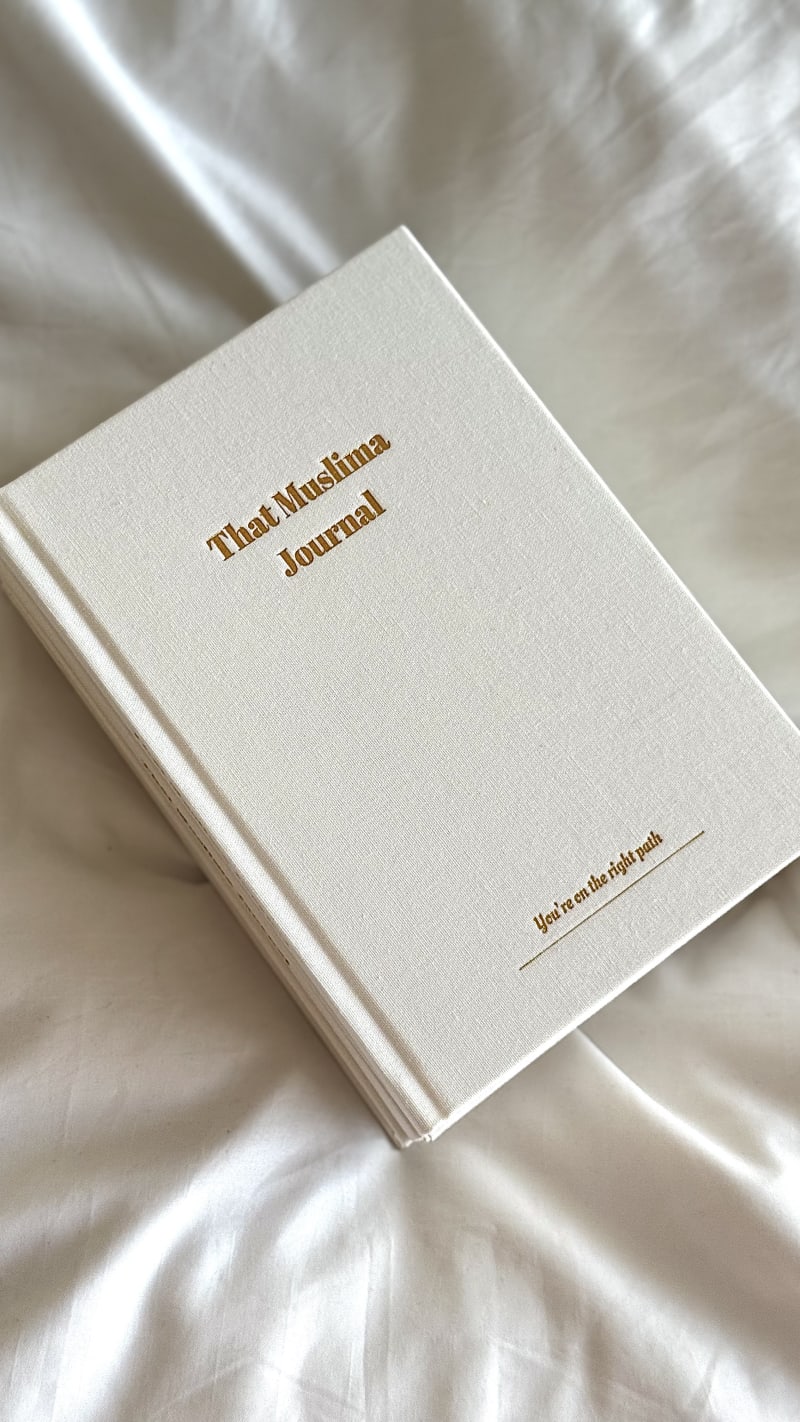
The That Muslima Journal can support this rhythm because it is designed for Muslim women who want faith to live inside their everyday routines, not outside them. A journal does not replace recitation, study, or worship. It simply gives your reflections a place to gather, so your relationship with the Quran becomes visible over time.
Connecting Surah Al-Mulk to Home Life, Sleep, and Daily Routines
One reason Surah Al-Mulk is powerful for evening journaling is that its themes naturally connect to the home. Home is where many women are most tested in patience, gratitude, service, and unseen effort. It is also where worship can become beautifully ordinary: a verse read beside a laundry basket, a dua whispered while the kettle boils, a moment of dhikr between putting children to bed and clearing the table.
When Surah Al-Mulk speaks of creation, look around your home and notice what Allah has placed in your care. The sleeping child. The meal that was enough. The roof over your head. The body that carried you through another day. The heart that still wants Allah even when it feels worn down. Journaling helps you name these signs instead of rushing past them.
When the surah speaks of accountability, let it soften rather than frighten you. Accountability is not only about obvious sins; it is also about how we used our blessings. Did I speak with mercy? Did I rest when my body had a right over me? Did I let resentment grow quietly? Did I thank Allah for what became normal? These reflections can transform an ordinary evening into a moment of return.
Before sleep, your journal can also become a place to release the day. Write one worry you are handing over to Allah. Write one mistake for which you seek forgiveness. Write one blessing you want to remember. Write one intention for tomorrow. This is not merely productivity. It is niyyah: orienting the heart before the next day begins.
Among the most practical Surah Al-Mulk journal ideas is to pair the practice with something you already do. Keep your journal near your bedside, prayer space, or Quran shelf. Open it after your night prayer, after the children sleep, or before you put your phone away. A habit becomes easier when it is attached to an existing rhythm instead of floating as a vague goal.
Making the Practice Realistic on Tired Nights
The most successful evening Quran journaling routine is the one that survives tired nights. It must have a full version and a minimum version. The full version may include recitation, translation, brief commentary, reflection prompts, and a written dua. The minimum version may be one verse, one meaning, and one honest sentence.
Give yourself permission to write imperfectly. Your handwriting may be messy. Your thoughts may be simple. You may repeat the same concern for several nights. None of this means the practice is failing. In fact, repetition can reveal what your heart is carrying. The journal is not a performance of spirituality. It is a witness to your effort.
On very tired nights, use a three-line method. Line one: “Tonight’s verse or theme.” Line two: “What it reminds me about Allah.” Line three: “How I want to live differently tomorrow.” This can take five minutes, yet it keeps the connection alive. Small sincere practices, repeated with care, often shape the heart more deeply than intense routines that are abandoned quickly.
It also helps to prepare prompts in advance. When your mind is exhausted, you should not have to invent a profound question. Write a few recurring prompts at the front of your journal: “What am I grateful for tonight?” “What do I need to seek forgiveness for?” “What does this passage teach me about trust?” “What worldly fear becomes smaller when I remember Allah’s dominion?” Return to them whenever you feel stuck.
If you miss a night, do not turn absence into guilt. Return the next evening without dramatizing the gap. The Quran is not a project you fail; it is guidance you return to. A busy season, postpartum exhaustion, work pressure, illness, or emotional heaviness may change the shape of your routine. Let the practice bend without breaking.
Over time, your Surah Al-Mulk reflections may become a record of spiritual growth. You may notice that verses about provision met you during financial worry, verses about sight and hearing awakened gratitude, and verses about accountability helped you repair a relationship. The same surah will accompany different versions of you, teaching you with fresh mercy each time.
A Quran reflection journal for Surah Al-Mulk on busy evenings is not about adding one more obligation to an already full life. It is about creating a small, protected space where the day ends under the light of revelation. You read. You notice. You respond. You entrust. And then, by Allah’s mercy, you sleep with a heart that has turned back toward Him.