Mother’s Day can arrive with flowers, family messages, social media tributes, and a quiet ache that not everyone can name. For some Muslim women, it is a sweet chance to express gratitude. For others, it stirs grief, comparison, guilt, distance, unmet needs, or memories of a relationship that has never felt simple. This is why mother's day journaling for muslim women can be more than a seasonal activity. It can become a gentle place to tell the truth before Allah, without dishonoring anyone and without abandoning yourself.
Islam teaches deep care for parents, especially mothers. Yet honoring your mother does not require pretending that every feeling is easy. Love can exist beside pain. Gratitude can exist beside boundaries. Respect can exist beside a need for space. Journaling helps you hold these layered realities with maturity, instead of forcing your heart into a performance it cannot sustain.
Why Mother’s Day Can Bring Mixed Feelings for Muslim Women
Many Muslim women carry a complex emotional map around motherhood. You may be a daughter trying to show love to your mother while still healing from words that wounded you. You may be grieving a mother who has returned to Allah. You may live far away and feel the heaviness of distance. You may be a mother yourself, quietly hoping someone will notice your labor. You may be navigating infertility, loss, stepfamily dynamics, adoption, divorce, or strained in-law relationships. A public day of celebration can make private tenderness feel louder.
There can also be family expectations during mother's day that make the season feel emotionally crowded. Perhaps your siblings expect a certain kind of celebration. Perhaps your mother wants more than you are able to give. Perhaps your family does not mark the day, but the wider culture makes you feel as if you should. Perhaps you feel torn between not wanting to imitate every custom around you and still wanting to express sincere appreciation. Journaling gives you space to separate your intention from pressure.
Begin with a simple question: What am I actually feeling as this season approaches? Not what should I feel, not what would look best, not what would make everyone comfortable. What is present in my chest when I think about my mother, motherhood, or being seen as a daughter? Naming the feeling is not disrespect. It is emotional honesty, and honesty is often the first step toward wise conduct.
Journaling Through Love, Grief, Distance, and Complicated Dynamics
A journal can become a private room where your love is allowed to be specific. Instead of writing only, I am grateful for my mother, try writing what you have received through her presence. Did she teach you patience, prayer, hospitality, discipline, courage, modesty, humor, or resilience? Did she survive circumstances you are only beginning to understand as an adult? Did she protect you in ways you did not recognize when you were younger?
If your mother has passed away, your journal may hold the conversation you wish you could still have. Write the memories you fear forgetting. Write what you miss in ordinary detail: her voice in the kitchen, the way she folded clothes, the advice you resisted, the scent of her home. Then write a dua for her with tenderness. Grief often needs both remembrance and supplication.
If distance shapes your relationship, write about what feels possible rather than what feels ideal. You may not be able to visit. You may not be able to explain every choice. You may be managing time zones, emotional gaps, or histories of misunderstanding. Ask yourself: What is one sincere act of connection I can offer without resentment? It might be a call, a message, a gift, a prayer, or a quiet act of service on her behalf.
If the relationship is complicated, your journal must be safe enough for the truth. You can write, I love her, and I am tired. I respect her, and I need boundaries. I appreciate what she gave, and I am grieving what she could not give. A mother-daughter reflection journal is not a court where you prosecute your mother or yourself. It is a place for muhasaba, where you examine your own heart with fairness, compassion, and accountability.
Reflecting on the Mothers and Mother-Figures Who Shaped You
Motherhood is not only biological in its emotional impact. Many women are shaped by grandmothers, aunts, older sisters, teachers, neighbors, mentors, and women in the community who offered shelter at crucial moments. During this season, journaling can widen your lens. Who mothered your faith? Who made you feel fed, protected, corrected, or remembered? Who modeled womanhood in a way that gave you courage?
Try writing a page titled, The Women Who Helped Raise My Heart. List the women who gave you something your soul still uses. One may have taught you to make dua before decisions. Another may have shown you the beauty of steady dhikr. Another may have made room for you when you felt invisible. This reflection does not diminish your mother. It honors the mercy of Allah in sending care through many doors.
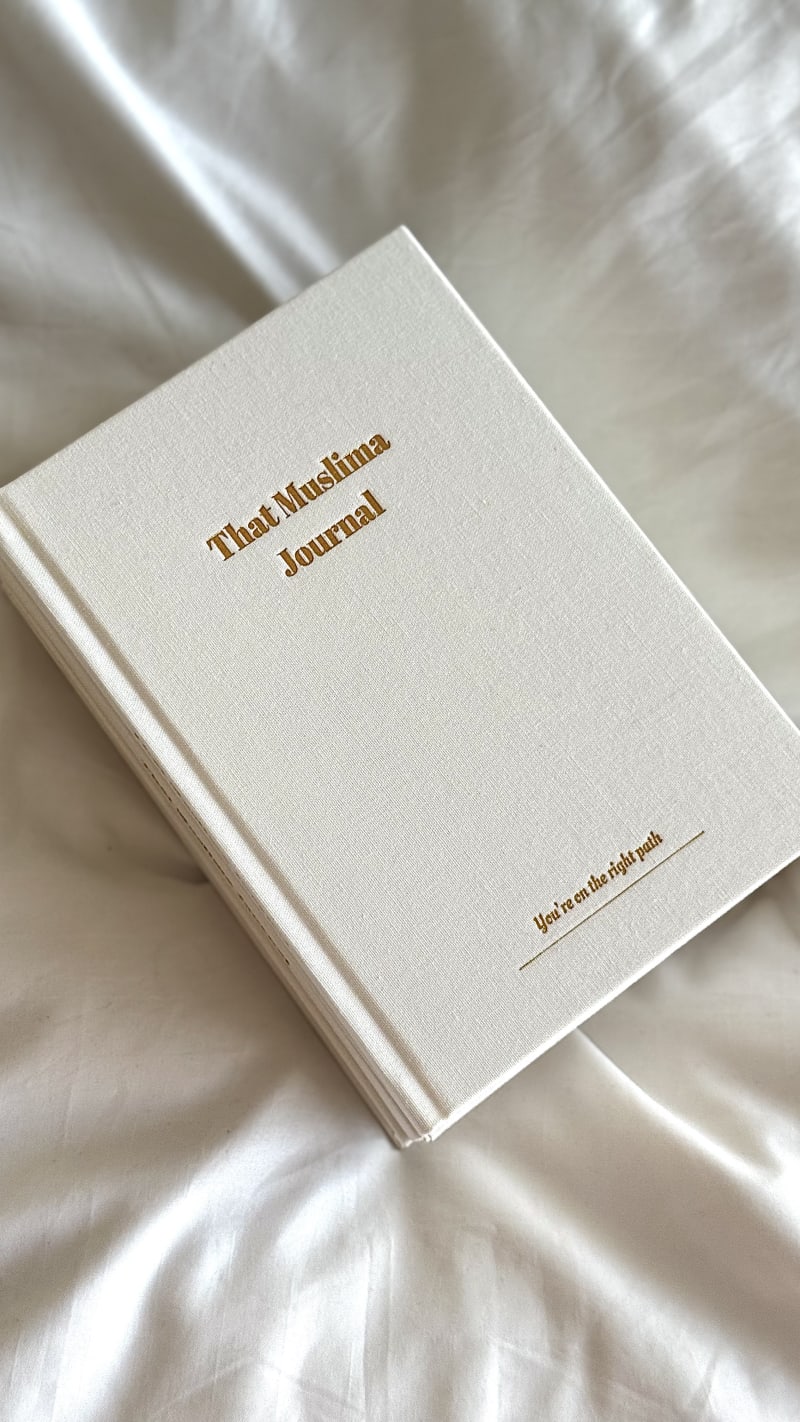
If you are using That Muslima Journal, you can dedicate a spread to these women and write one sentence for each: What did she give me? What did I learn from her? How can I carry forward her goodness? This turns memory into intention, and intention into gentle action.
Protecting Your Heart While Showing Up Kindly
Muslim women self-care in family season is not about selfishness or emotional withdrawal. It is about stewarding the heart Allah entrusted to you. A depleted, resentful, overwhelmed heart may still perform the correct gestures, but it often loses sincerity. Protecting your heart can help you show up with more truth, not less love.
Before you decide what to do for Mother’s Day, write your niyyah. You might write: I want to please Allah by showing gratitude without harming my emotional well-being. I want to speak kindly without agreeing to what is unhealthy. I want to give from sincerity, not fear. This kind of intention can clarify your actions.
Then write two columns: What I can offer and What I cannot offer. In the first column, include realistic gestures: a visit for a set amount of time, a thoughtful card, a meal, a phone call, a gift, a prayer, or help with a task. In the second column, write what would cross your limits: staying in a conversation where you are insulted, spending beyond your means, explaining your life choices repeatedly, or pretending that past harm never happened.
Boundaries do not need to be harsh to be real. You may say, I want to spend time with you, and I can stay until early evening. You may say, I love you, but I am not able to discuss that topic today. You may say, I am thinking of you and making dua for you, even if I cannot visit this weekend. The journal helps you rehearse language that is kind, clear, and not fueled by panic.
Journaling for tender family emotions also helps you notice old patterns before they take over. Do you become the fixer? The silent one? The over-giver? The one who absorbs everyone’s disappointment? Write the pattern down. Then ask: What would a more faithful, calmer version of me do here? This question invites you to respond from spiritual maturity rather than old survival habits.
Prompts for a Gentle Mother’s Day Reflection
Set aside twenty quiet minutes, make dua for clarity, and answer only the prompts that feel useful. You do not have to complete them all. Let the page become a companion, not another obligation.
What do I appreciate about my mother that I may not say often enough? What pain or disappointment do I need to acknowledge privately so it does not leak into my behavior? What is one memory of my mother, or a mother-figure, that shaped the woman I am becoming? What do I need from Allah as I move through this season? What boundary would help me remain respectful and emotionally steady? What act of mercy can I offer without betraying my own limits?
After writing, place your hand over your heart and read one sentence aloud, especially the sentence that feels most honest. Sometimes the heart softens when it hears the truth spoken gently.
A Closing Reflection on Mercy, Dua, and Emotional Boundaries
To honor your mother is a noble desire. To protect your heart is not a contradiction of that desire. In many cases, it is what allows honor to remain sincere. You are allowed to love with wisdom. You are allowed to grieve what was missing. You are allowed to thank Allah for what was good. You are allowed to make dua when words with people feel too difficult.
This Mother’s Day season, do not measure your sincerity by how perfectly you perform celebration. Measure it by the care you take with your intention, your speech, your prayers, and your limits. Let your journal hold what cannot be posted, explained, or neatly resolved. Let it be a place where mercy does not erase truth, and truth does not erase mercy.
May Allah grant our mothers forgiveness, healing, honor, and light. May He comfort the daughters who are grieving, soften what can be softened, and protect what needs protection. And may He teach us to show up with hearts that are both tender and guarded by wisdom.