By the time evening arrives, many Muslim women are not looking for another ambitious habit to manage. They are looking for a softer landing. After work, caregiving, study, meals, errands, messages, prayers, and the quiet emotional labor that often fills the day, the heart may still be carrying what the body is too tired to explain.
This is where night time journaling ideas for Muslim women can become deeply nourishing. Not as a performance. Not as a perfectly written reflection. Not as another item on a self-improvement list. Rather, as a gentle pause before sleep, a few minutes to place the day in front of Allah, sort through what feels heavy, and let the soul return to calm.
A journal before bed for Muslim women can be especially powerful because it meets life as it actually is. The house may finally be quiet. The tasks may not all be finished, but the pace has slowed. The mind, which may have been postponing its own needs all day, finally has enough space to speak.
Why late evening is often the most realistic time
Many women are told to journal in the morning, and for some, that is beautiful. But for others, mornings are not spacious. They are filled with school runs, nursing babies, rushing to work, preparing breakfast, answering urgent messages, or simply trying to begin the day with enough steadiness to function.
Late evening offers a different kind of opening. It does not require the bright energy of a new day. It only asks for honesty. It allows you to gather the scattered pieces of your inner world after you have been useful to everyone else. This is why evening journal ideas for Muslim women need to be realistic, tender, and spiritually grounded.
In the Islamic tradition, the night has always carried a special stillness. It is a time for quiet dua, sincere reflection, and returning to Allah without the noise of the day pressing so loudly. Even if you are too tired for a long worship routine, a few written lines can become a form of muhasaba, a gentle self-accounting that helps you notice where your heart has been.
Night journaling is not about analyzing every mistake or replaying every conversation. It is about creating a safe place to release what you cannot carry into sleep. When approached with mercy, the page becomes less like a checklist and more like a soft blanket for the heart.
Simple sections to release the day
A soft wind down journal for Muslim women works best when it has a predictable shape. On tired nights, you should not need to invent a new format. The simpler the page, the easier it is to return to it.
Begin with a small release section. You might write, Today I am putting down, followed by two or three things that felt heavy. These do not need to be dramatic. They may be a sharp tone you regret, a task you did not finish, a worry about money, a moment of loneliness, or the feeling that you gave too much of yourself away.
Naming stress is different from drowning in it. When you write it down, you create a little distance between your soul and the pressure surrounding it. You are not denying the burden, but you are no longer letting it move through your body unnamed.
Then create a section for what your heart needs. You may write, My heart is asking for, and answer honestly. Rest. Reassurance. Forgiveness. Help. Silence. Better boundaries. More trust in Allah. A calmer morning. This simple line can reveal needs you have ignored all day.
Finally, include one line of return. This is where your journaling becomes spiritually anchored. You may write a short dua in your own words, such as asking Allah to forgive what was lacking, accept what was sincere, soften what feels tight, and protect your sleep. You do not need elaborate language. Sincerity is enough.
How to keep it short enough to repeat
The practice only becomes sustainable when it respects your exhaustion. A night journal should not require thirty minutes, perfect handwriting, or emotional depth every evening. Some nights, two sentences are more faithful than two empty pages written out of pressure.
Set a limit before you begin. Ten minutes is generous. Five minutes is valid. One minute is still a return. If journaling becomes too long, your mind may begin to avoid it because it feels like work. The goal is not to empty every thought; it is to create enough spaciousness to sleep with a lighter heart.
You can also use repeatable quiet night journaling prompts so the page does not feel intimidating. Try prompts such as: What am I still carrying from today? What can I leave with Allah tonight? Where did I see mercy today, even in a small way? What do I need to forgive myself for before I sleep? What is one thing I can make easier tomorrow?
These prompts are intentionally gentle. They do not force positivity, and they do not invite endless overthinking. They help the mind move from noise to clarity, and from clarity to surrender.
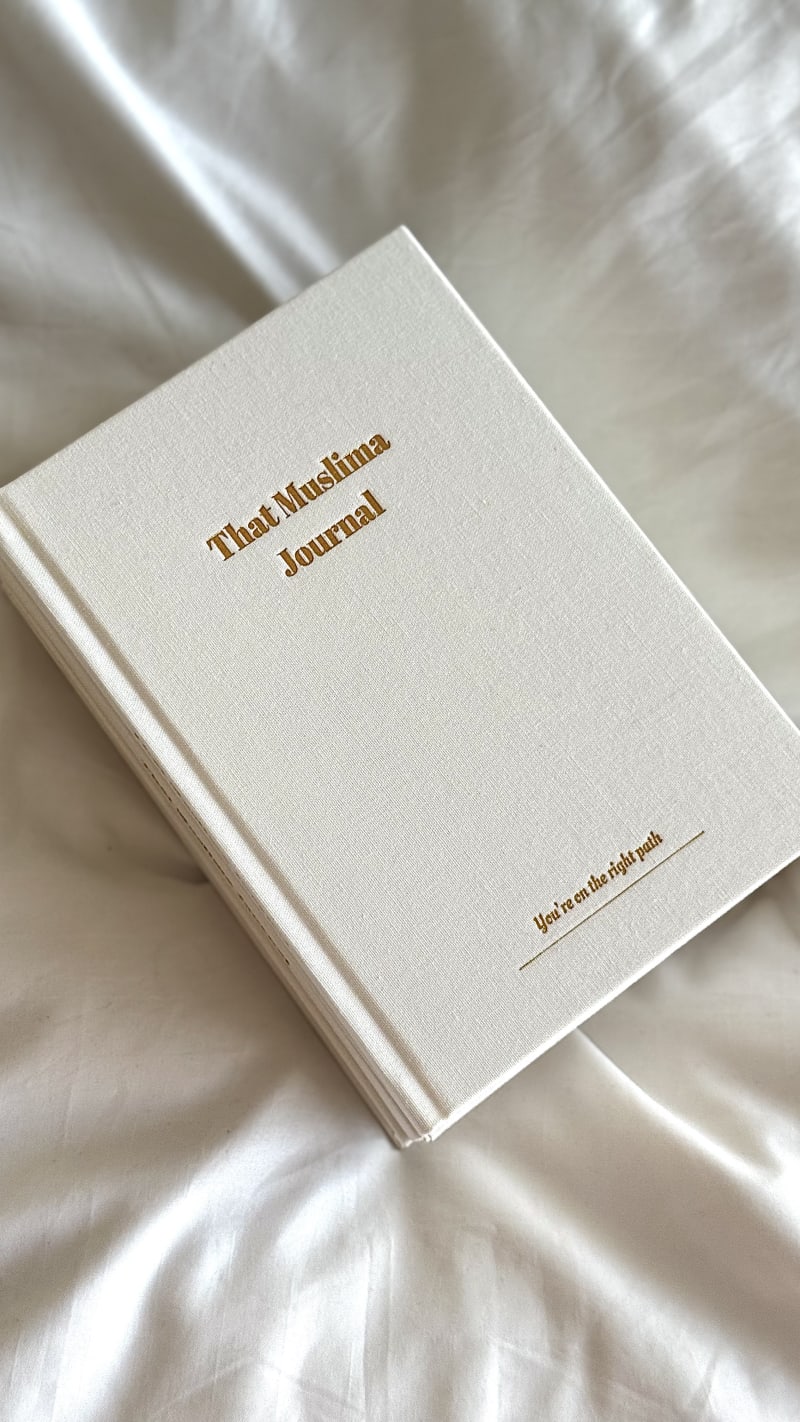
If you use That Muslima Journal, you can dedicate a small evening section to this rhythm, especially if you enjoy having your spiritual reflection, emotional check-in, and intentions held in one beautiful place. The journal itself does not do the healing for you, of course, but a well-designed space can make it easier to return to yourself with consistency and care.
A sample 10-minute night journaling page
Here is a simple page you can complete before bed, even when your energy is low. Start with one minute of stillness. Breathe slowly. Make your niyyah that this is not self-criticism, but self-honesty in the presence of Allah.
For the first two minutes, write three things you are releasing from the day. Keep them brief. For example: I release the conversation I keep replaying. I release the guilt of not finishing everything. I release the fear that I am behind.
For the next two minutes, name what you felt without judging it. You might write: I felt overstimulated. I felt unappreciated. I felt grateful but tired. I felt distant from myself. Emotional honesty is not ingratitude. It is often the beginning of deeper gratitude because it allows you to stop pretending.
For the next two minutes, write one mercy from the day. This could be a child smiling at you, a prayer you managed to make on time, a warm drink, a message from a friend, or the fact that you kept going when things were not easy. Mercy is not always grand. Often, it is quiet and easy to miss.
For the next two minutes, write a short dua. Ask Allah for what your heart truly needs tonight. Ask for forgiveness, rest, guidance, healing, patience, or a softer tongue tomorrow. You can also include a line of dhikr by writing a phrase of remembrance that settles you and reminds you that you are held by the One who never sleeps.
Use the final minute to choose one small kindness for tomorrow. Not a full life reset. Just one doable act. Drink water before coffee. Pause before replying. Pray with more presence. Ask for help. Step outside for sunlight. Begin again without punishing yourself.
Pair journaling with a calm sleep routine
Journaling becomes even more soothing when it is paired with small physical cues that tell your body the day is ending. Dim the lights. Put your phone away or place it across the room. Make wudu if you are able. Choose a pen that writes smoothly. Keep your journal near your bed so beginning does not require effort.
You may also connect your writing to a simple sequence: tidy one small surface, prepare what you need for morning, journal for five to ten minutes, make dua, then sleep. Repetition teaches the nervous system safety. Over time, the page becomes a familiar doorway into rest.
Try not to use your night journal as a place to solve every problem. Some issues need action, conversation, planning, or support. But not every thought deserves to follow you into sleep. Sometimes the most spiritual thing you can write is: I cannot fix this tonight, so I leave it with Allah until morning.
This is the heart of night journaling for Muslim women: not control, but release. Not perfection, but return. Not another burden, but a small act of mercy toward the self Allah entrusted to you.
At the end of a long day, you do not need to write beautifully. You do not need to have profound insights. You only need a quiet place to be honest, grateful, tired, hopeful, and human. Let the page receive what you have carried. Let your dua rise from whatever is tender. Then close the journal, trust Allah with the unfinished parts, and allow yourself to rest.