There is often a silence that arrives after pilgrimage. The suitcases are open, the laundry is waiting, the gifts have been handed out, and ordinary life begins asking for your attention again. Yet something inside you may still be walking between sacred places, remembering the heat, the crowds, the prayers, the tears, the closeness. Then your first menstrual cycle after Umrah or Hajj begins, and the return home can feel even more tender.
For many women, this first period after pilgrimage carries emotions they did not expect. It may feel like a pause after spiritual intensity, a physical reminder that the body has its own sacred rhythms. You may feel grateful, tired, distant, peaceful, overwhelmed, or strangely sad. A first period after Hajj journal can become a gentle place to hold all of that without rushing to explain it.
Menstruation does not mean your spiritual life has stopped. It means your form of worship changes for a few days. You may not be praying in the same way, but your heart can still remain awake through dua, dhikr, reflection, gratitude, and remembrance. Journaling can help you return slowly, lovingly, and honestly.
Why the first period after Hajj or Umrah can feel emotional
Pilgrimage is not only a journey of the feet. It is a journey of the nervous system, the memory, the heart, and the soul. During Hajj or Umrah, you may have moved through exhaustion, awe, vulnerability, crowds, waiting, devotion, and deep longing for Allah. You may have made dua with a sincerity you had been carrying for years. You may have seen yourself clearly, perhaps more clearly than you expected.
When your first menstrual cycle after Umrah or Hajj begins, it may coincide with the moment when your body finally releases what it has been holding. Travel fatigue, hormonal changes, disrupted sleep, and the emotional weight of returning home can all meet at once. Tears may come easily. Small tasks may feel heavy. You may miss the sacred simplicity of being there, where so much of life seemed organized around worship.
This can be understood as part of the pilgrimage come-down journaling process. The return from a sacred place can feel disorienting because your inner life has been stirred, but your outer life may look almost the same. The dishes are still there. Messages need answering. Family routines resume. Yet you are not exactly the same woman who left.
Writing gives you a place to notice that difference. Instead of judging yourself for feeling low, distracted, or emotionally raw, you can ask what your heart is trying to integrate. Sometimes sadness after pilgrimage is not a sign that the experience is fading. It may be a sign that it mattered deeply.
Reflecting on what stayed with you spiritually
A meaningful Muslim women post-Hajj reflection does not need to be dramatic. You do not have to produce a perfect lesson, a grand transformation plan, or a list of resolutions. Begin with what stayed. The moment that returns to your mind without effort. The place where your heart softened. The dua you repeated again and again. The person whose kindness surprised you. The weakness you brought to Allah and did not need to hide.
You might write: What did I learn about my dependence on Allah? When did I feel most humbled? What did I ask for that still feels alive in me? What did I leave behind, even if no one else saw it? What did I carry home that I want to protect?
These questions matter because pilgrimage can become blurred once daily life resumes. Journaling helps preserve the spiritual texture of the journey. It records not only what happened, but what it awakened. You are not trying to trap the experience on paper. You are allowing it to continue teaching you.
If you are menstruating and unable to pray as usual, you may feel a certain ache. Let that ache speak. Write about what you miss. Write about what prayer felt like there. Write about how you want to return to prayer when your period ends and ghusl is complete. Longing itself can be a form of spiritual honesty.
Gentle writing ideas for gratitude, memory, and intention
During your period, choose writing prompts that are soft enough for your energy. This is not the time to force productivity out of a sacred experience. Think of your journal as a quiet companion. The pages do not need polished language; they need truth.
Begin with gratitude. Write three moments from Hajj or Umrah that you never want to forget. They may be very simple: a cup of water when you were thirsty, a stranger making space for you, a moment of shade, a tear that came during dua, the sight of the Kaaba, the feeling of being one woman among countless believers. Gratitude becomes deeper when it is specific.
Then write a memory with all your senses. What did the air feel like? What sounds surrounded you? What did your body feel after a long day? What did your heart feel when you realized where you were? Sensory writing helps your memory become grounded rather than abstract. It honors the fact that your body was part of your worship too.
Finally, write one intention, or niyyah, for ordinary life. Not ten. Not a complete reinvention. One sincere intention may be enough. Perhaps you want to guard your morning dhikr, speak more gently at home, return to the Quran with consistency, protect your modesty of speech, or pause before reacting. Let the intention be small enough to live with and sacred enough to matter.
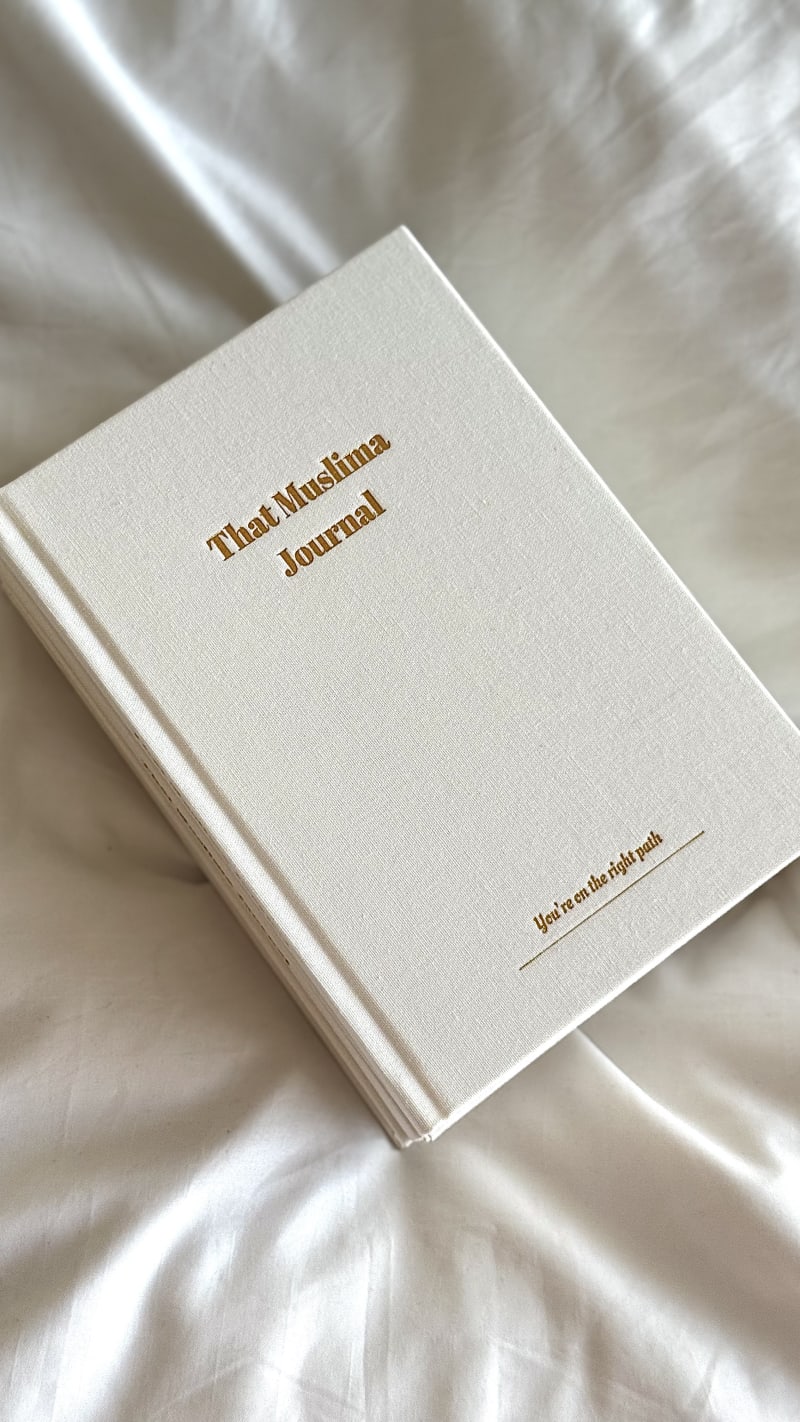
That Muslima Journal was created for this kind of reflective return: the place where worship, womanhood, emotion, and daily life meet. A journal can hold the prayers you made, the lessons you fear forgetting, and the quiet promises you want to renew when your energy returns.
Returning to worship after pilgrimage without rushing your heart
Returning to worship after pilgrimage can feel delicate. You may want to preserve the spiritual clarity you felt in Makkah or Madinah, but home contains distractions that sacred travel temporarily removed. It is easy to feel disappointed when your focus is not the same, or when old habits reappear faster than you hoped.
Be careful not to turn your return into a test you must pass perfectly. Pilgrimage was not meant to make you superhuman. It was meant to return you to Allah with a softer heart and a clearer sense of need. Your task now is not to recreate the atmosphere of Hajj or Umrah in every detail. Your task is to let its light enter your real life.
During menstruation, reconnect through the forms of worship available to you. Make dua while resting. Repeat simple dhikr while folding clothes. Listen to Quran recitation if that supports your heart. Read beneficial reminders. Give charity. Ask Allah to accept what you did and to guide what comes next. If you have questions about specific acts of worship during menstruation, seek trusted scholarly guidance, but do not assume that closeness is closed to you.
When your period ends, return gently. Your first prayer after ghusl may feel emotional, ordinary, distracted, or deeply peaceful. Let it be what it is. Do not demand that every prayer carry the intensity of pilgrimage. Faithfulness is often quieter than intensity. The sacred experience is honored not only through strong feelings, but through steady return.
Honoring the sacred while living the ordinary
One of the most beautiful fruits of pilgrimage is learning that the ordinary can become an arena of remembrance. The patience you practiced in crowds can become patience with your family. The humility you felt among millions can become humility in disagreement. The gratitude you felt for water, rest, and shade can become gratitude in your kitchen, your workplace, your school run, your bedroom, your quiet evenings.
Use your journal to translate sacred memory into ordinary practice. Write one lesson from pilgrimage and one place in your daily life where it can live. If you learned patience, where will patience be needed this week? If you learned trust, what worry can you place before Allah tonight? If you learned simplicity, what can you release from your schedule, your spending, or your expectations?
This is how pilgrimage continues after the flight home. Not as a memory preserved behind glass, but as a living mercy shaping your manners, choices, and worship. Your menstrual cycle, with all its tenderness and pause, can become part of that continuation. It invites you to slow down enough to ask what the journey truly changed.
A closing reflection for the weeks after returning home
In the weeks after Hajj or Umrah, return to this reflection whenever you feel spiritually scattered: What did Allah allow me to witness, and how can I respond with love?
Write the question at the top of a page. Sit with it for a few minutes. You may answer with gratitude, repentance, longing, confusion, or hope. All of these can be sincere. Let your journal become a place of muhasaba, not self-criticism; a place of remembrance, not pressure.
Your first period after pilgrimage is not an interruption to your spiritual life. It is part of your return as a whole woman: body, soul, memory, and heart. The sacred journey changed you in ways that may unfold slowly. Give those changes space. Write them down. Protect what softened in you. And when worship resumes in its familiar forms, return not as someone trying to prove she has changed, but as someone gently answering the One who called her there and brought her home.