Your period can arrive with more than cramps, fatigue, and cravings. For many Muslim women, it also brings a tender spiritual shift. The prayer mat is folded for a few days. Fasting is paused. The familiar structure of worship changes. Even when you know this pause is part of Allah’s mercy, your heart may still feel unsettled, as if your inner rhythm has been interrupted.
This is where learning how to journal during your period can become deeply healing. Journaling does not replace ritual worship, and it is not meant to make you prove your devotion during a time when Allah has already given you ease. Rather, it becomes a gentle place to notice your body, honor your emotions, renew your intention, and remember that closeness to Allah is not limited to one visible form.
Why Period Weeks Can Feel Spiritually Disjointed
Period weeks can feel spiritually disjointed because many of us rely on visible acts to measure our connection. We know when we have prayed. We know when we have fasted. We know when we have completed a certain portion of recitation or attended a gathering. When those acts change, the mind can wrongly interpret the change as distance.
But your period is not a spiritual failure. It is not an interruption to your worth. It is part of the body Allah created, with rhythms, limits, needs, and wisdom. The challenge is not that your worship has ended. The challenge is that your usual doorway into worship has shifted.
This is an important moment for women’s health and faith to be held together instead of treated as separate lives. Your hormones, pain levels, sleep, appetite, and emotional sensitivity all affect how you experience your days. A faithful life does not ask you to ignore that. It asks you to meet your body with honesty and mercy, then turn back to Allah through the openings still available to you.
Stay Emotionally Anchored When Ritual Worship Changes
When your regular acts of ritual worship are paused, you may need smaller anchors. These are not performance goals. They are quiet reminders that you still belong to Allah, even in a slower week.
Begin with one honest sentence in your journal each morning: O Allah, meet me where I am today. Then write what is true. Not what you think a good Muslim woman should feel, but what is actually present. Tired. Irritable. Soft. Lonely. Relieved. Heavy. Grateful. Confused. Naming an emotion is not complaining. It is witnessing your inner state before Allah with humility.
You might choose a simple form of dhikr to pair with journaling. Write one name of Allah and reflect on how you need that meaning today. If you write The Most Merciful, ask yourself where you are refusing mercy. If you write The Gentle, ask where you are speaking harshly to your body. If you write The Provider, ask what kind of support you are allowed to receive.
A spiritual routine on your period may also include listening to Quran, reading a translation, sending blessings upon the Prophet, making dua, seeking beneficial knowledge, giving charity, or simply sitting in quiet remembrance. Follow the guidance you trust regarding acts connected to Quran and purity, and do not turn scholarly differences into anxiety. The aim is reverence, not panic.
Journal Sections for Body Check-Ins, Mood, and Mercy
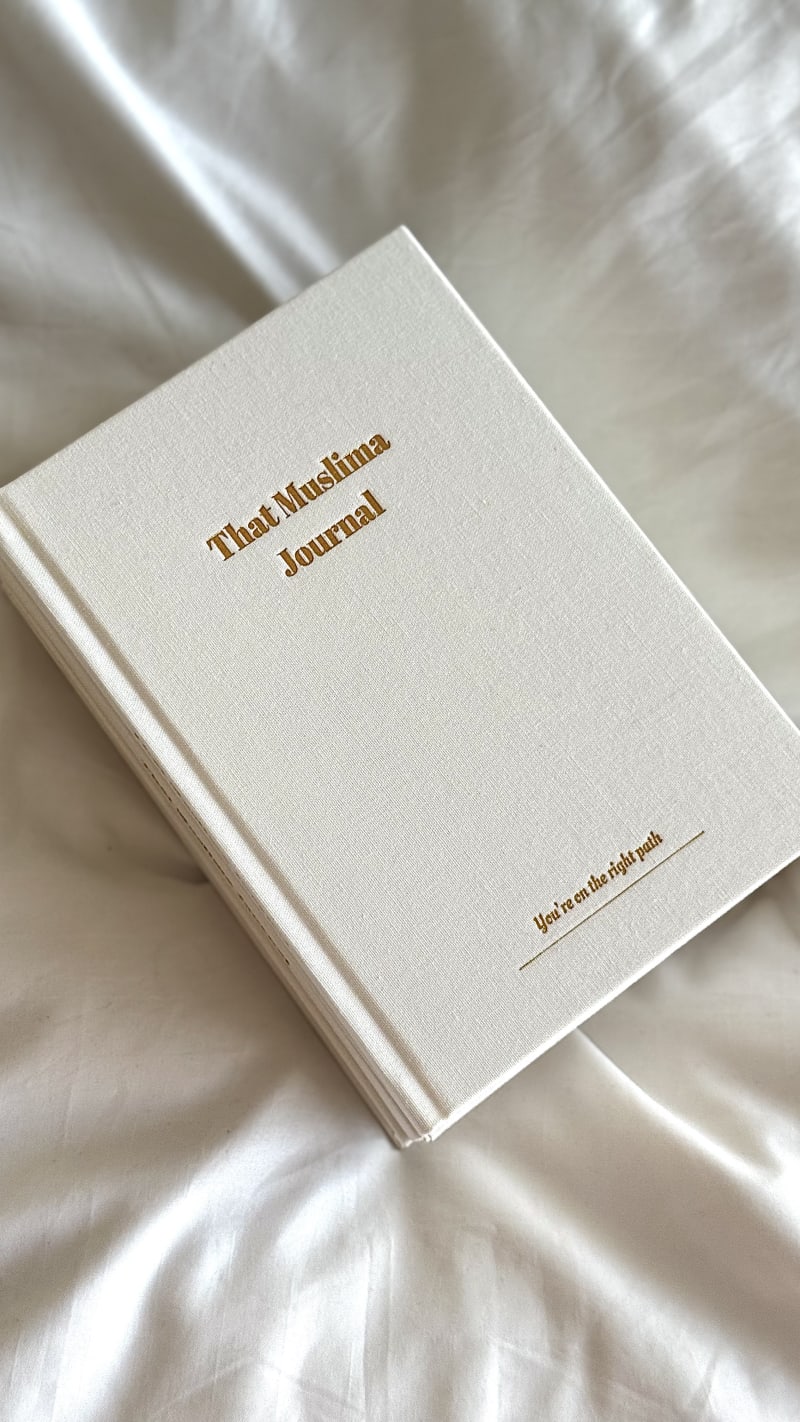
A period journal does not need to be long. In fact, during lower energy days, the best pages are often simple. The That Muslima Journal can support this kind of reflection because it gives your thoughts a beautiful, intentional place to land without making your faith feel like another task.
Start with a body check-in. Write the date, the day of your cycle if you track it, and three words for your physical state. For example: heavy, sore, sleepy. Then ask: What does my body need today that I can realistically offer? The answer might be water, warmth, iron-rich food, a walk, earlier sleep, or permission to move slowly. Muslim women period self care should not be treated as indulgence. Caring for the body is part of honoring the trust you have been given.
Next, create a mood section. Ask yourself: What feeling is loudest today? What might be beneath it? Hormonal changes can intensify emotions, but intensity does not make an emotion meaningless. Anger might reveal exhaustion. Sadness might reveal a need for tenderness. Anxiety might reveal that you are carrying too much alone. Journaling helps you respond instead of simply reacting.
Then add a mercy section. This is the part of the page where you refuse to speak to yourself like an enemy. Write one sentence beginning with: Allah is not asking me to... You might write: Allah is not asking me to ignore pain. Allah is not asking me to earn rest. Allah is not asking me to feel guilty for what He has allowed me to pause.
Finally, include a short muhasaba section, but keep it compassionate. Ask: What did this week reveal about my heart? Not to shame yourself, but to learn. Did you notice how attached you are to productivity? Did you see a pattern of snapping when you need support? Did you realize you only feel spiritual when you are doing many visible things? These observations can become invitations to growth.
Replace All-or-Nothing Thinking With Compassion
Many women fall into all-or-nothing thinking during their period. If I cannot pray, I will do nothing. If I cannot fast, I am spiritually behind. If my energy is low, I am lazy. If I feel emotional, my faith is weak. These thoughts may sound familiar, but they are not the voice of wisdom.
Compassionate faith is more precise. It says: My obligations are different right now, but my relationship with Allah remains. My body is tired, but my heart can still remember. I am not performing the same acts, but I can still practice gratitude, restraint, patience, and hope.
A helpful journaling exercise is to draw two columns. On one side, write the harsh thought. On the other, write a truer, kinder response. Harsh thought: I am disconnected. Truer response: My routine has changed, and I am finding another path of remembrance. Harsh thought: I wasted the day. Truer response: I rested, I endured discomfort, and I can still end the day with dua.
This kind of period week reflection teaches you to measure spirituality with more depth. Sometimes your worship is standing in prayer. Sometimes it is guarding your tongue while in pain. Sometimes it is accepting Allah’s mercy without arguing with it. Sometimes it is letting yourself be human and still turning back.
A Gentle Practice for the Last Days of Your Period
As your period nears its end, you may feel eager to return to your normal routine. That eagerness can be beautiful, but it can also become pressure. Instead of rushing into a strict reset, use your journal to prepare your heart.
Write three small notes. First: What did I learn about my body this week? Second: What did I learn about my emotions? Third: What did I miss most about my regular worship? The third answer is especially meaningful. Missing prayer can renew love. Missing fasting can increase gratitude. Missing the physical rhythm of worship can remind you that these acts are gifts, not burdens.
Then write a simple niyyah for returning: O Allah, allow me to return to worship with sincerity, steadiness, and gratitude. Help me begin again without harshness. This intention can soften the transition from rest back into routine.
When your period ends and you are ready to resume normal worship, keep your first day simple. Pray with presence rather than trying to compensate emotionally for the days you paused. Rebuild gently. Let your journal hold one final line: I returned by Allah’s mercy, not by my own perfection.
Your period week is not outside your spiritual life. It is one of the places where your spiritual life becomes more honest. You learn to receive ease without guilt, to listen to your body without losing your heart, and to remember Allah beyond the forms you are temporarily unable to practice. In that remembering, your rhythm is not lost. It is simply made softer.