When a parent searches for dua for girls, the intention is usually tender and practical at the same time. A mother may be wondering how to help her young daughter remember Allah before school. An aunt may want to teach her niece something meaningful without making it feel like a lesson. A teacher may be looking for a short, age-friendly supplication that students can repeat with confidence. Beneath the search is a deeper hope: to help a girl grow up feeling that turning to Allah is natural, safe, and close.
For young Muslim girls, learning dua is not only about memorizing words. It is about forming an inner reflex: when I am grateful, I turn to Allah; when I am nervous, I turn to Allah; when I begin something, I remember Allah. That reflex grows best in an atmosphere of warmth. A child who associates dua with pressure may learn the words but miss the sweetness. A child who associates it with love, rhythm, and belonging is more likely to carry it into her own heart as she grows.
What parents are really looking for when they search for dua for girls
Parents often search this phrase because they want something simple enough for a child, but meaningful enough to matter. They may not be looking for a long collection. They may be asking, “Where do I begin?” or “How can I make remembrance part of her everyday life?” Some parents worry that their daughter is still too young, too distracted, or too shy to repeat words aloud. Others worry that they have not been consistent enough themselves.
The good news is that children do not need a perfect system. They need a gentle beginning. A short supplication, repeated at the same moment each day, can become a doorway into dhikr, gratitude, and trust. The aim is not to make a young girl perform spirituality. The aim is to help her recognize that Allah is near in ordinary moments: at the table, in the car, at bedtime, before a test, after a hard day, and when she feels happy.
Begin with one short supplication, not many
Adults often underestimate how much emotional meaning a child can attach to one small routine. Instead of introducing several supplications at once, choose one short dua connected to a daily moment. This may be a bedtime supplication, a supplication before leaving home, or simple words asking Allah for goodness, protection, and ease. The key is to keep it short enough that your daughter can succeed quickly.
For very young girls, begin by saying the supplication aloud yourself while she listens. Then invite her to repeat one phrase after you. For early readers, you can write the transliteration on a small card. For older girls, you can add the meaning and discuss it briefly. A child is more likely to remember when she understands the feeling behind the words. If she knows that a bedtime dua is about safety and peace, or that a morning dua is about beginning the day with Allah’s help, the words become more than sounds.
Keep the tone gentle, never pressured
Memorization should never become a test of a child’s worth. If she forgets, pauses, laughs, or mixes up words, stay calm. Young children learn through repetition, movement, emotion, and imitation. The way you respond to mistakes teaches her what kind of relationship she is building with worship. If your face tightens every time she forgets, she may begin to feel anxious. If you smile and say, “Let us try again together,” she learns that returning is part of learning.
Use language that gives confidence without exaggeration. You might say, “I love hearing you remember Allah,” or, “You are learning little by little, and that is beautiful.” You can also say, “It is okay if you forget; we remember together.” These sentences matter. They tell a young girl that dua is not a performance for approval. It is a personal conversation with Allah, and the family is simply helping her find the words.
Build repetition into daily moments
The easiest way to teach dua is to attach it to something that already happens every day. If the routine already exists, the reminder does not feel like an extra task. Leaving home, buckling a seat belt, eating breakfast, opening a lunchbox, arriving at school, starting homework, and getting into bed can all become soft cues for remembrance.
For example, at the door you might pause for ten seconds and say the same short supplication before leaving home. At bedtime, you might dim the light, place a hand on her shoulder, and repeat a night supplication together. Before meals, you might invite the youngest child to lead the family in remembering Allah. During school drop-off, instead of only saying, “Have a good day,” you might add, “May Allah make your day easy and full of good.” Over time, these repeated moments create a map in her mind: certain parts of the day naturally belong to dua.
This kind of repetition is powerful because it is embodied. She hears the words in the same hallway, at the same table, in the same car seat, beside the same pillow. The body remembers what the mind may forget. That is why a calm, consistent cue often works better than a long lecture.
Use visual cues without making the home feel like a classroom
Children benefit from seeing what they are learning. A small card near the door, a note beside the bed, or a page in a personal journal can help a girl recognize the words and return to them independently. Keep the design simple. Too many colors, stickers, and instructions can overwhelm the purpose. A single supplication, its meaning, and a small symbol such as a moon for bedtime or a door for leaving home may be enough.
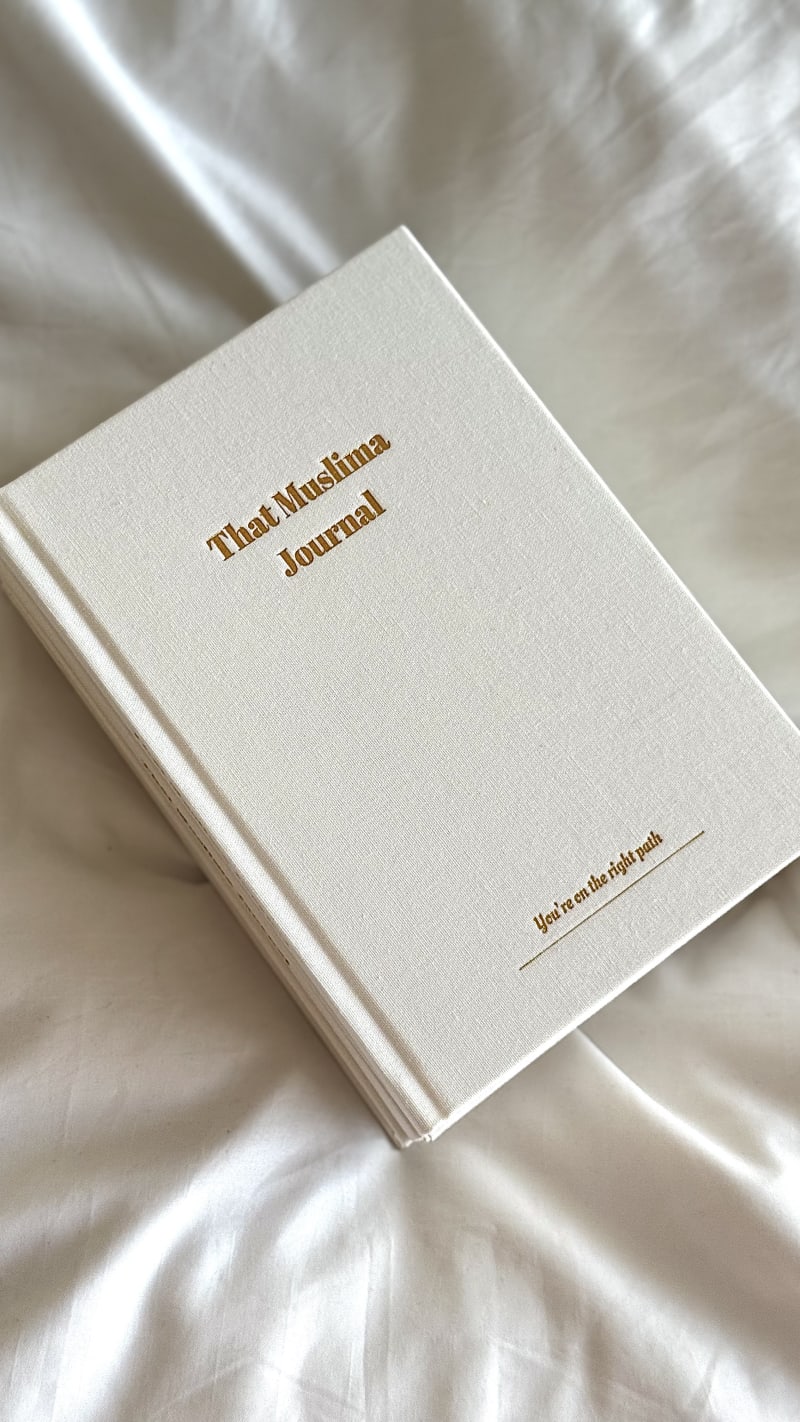
A small journal page can be especially meaningful for girls who enjoy writing, drawing, or keeping personal things. She can copy the supplication, write what it means in her own words, or draw a scene that reminds her when to say it. This is where That Muslima Journal can support the habit beautifully: it gives young Muslim hearts a calm place to connect worship with reflection, gratitude, and identity without turning faith into a checklist.
If your daughter is older, invite her to choose the visual cue herself. Ask, “Where should we place this so it helps you remember?” That small choice gives her ownership. She is no longer only being instructed; she is participating in building her own rhythm of remembrance.
Make meaning part of the memory
Children can memorize sounds quickly, but meaning helps those sounds settle into the heart. After repeating a supplication, ask one simple question: “What are we asking Allah for?” Keep the answer short. If the supplication is connected to protection, say, “We are asking Allah to protect us.” If it is connected to gratitude, say, “We are thanking Allah for what He gave us.” If it is connected to ease, say, “We are asking Allah to make this easy.”
You can also connect the supplication to her real feelings. Before school, you might say, “If you feel nervous today, remember that you already asked Allah for help.” At bedtime, you might say, “When we say this, we are ending the day by trusting Allah.” This helps her understand that dua is not only for formal moments. It belongs to her worries, hopes, friendships, learning, and quiet thoughts.
Encouraging words parents can use
The language parents use around faith can stay with a child for years. Choose words that build love and confidence. Try saying, “Your voice remembering Allah is precious.” Or, “Let us say it together until it feels easy.” Or, “You do not have to know everything today; one small dua is a beautiful start.”
When she remembers without being reminded, notice it gently: “I saw that you remembered before eating. That was a lovely choice.” When she struggles, protect her dignity: “Everyone learns by repeating. I still repeat things too.” When she asks why she has to learn, answer with warmth: “Because dua helps your heart know where to go. Whenever you need help, you can ask Allah.”
Avoid comparing siblings or students. One girl may memorize quickly but feel shy. Another may take longer but reflect deeply. Another may sing the rhythm to herself before the words become clear. Each child has her own path. The goal is not speed; it is attachment to Allah.
A simple family memory routine
Choose one supplication for one moment of the day. Write it clearly on a small card or journal page. Read it aloud to your daughter for three days without asking her to repeat it perfectly. On the fourth day, invite her to say one phrase with you. After a week, ask if she would like to lead it. If she says no, continue together. If she says yes, let her lead even if she needs help.
Pair the routine with a stable cue. For bedtime, the cue may be closing the curtains. For leaving home, it may be touching the door handle. For meals, it may be sitting down before the first bite. For school drop-off, it may be the moment before she opens the car door. The cue should be small and repeatable. The more ordinary it is, the more likely the habit will last.
Once a week, invite a little muhasaba in child-friendly language. Ask, “When did this dua help you remember Allah this week?” She may answer simply, or she may shrug. That is fine. You are planting a reflective habit. Over time, she may begin to connect remembrance with real life.
A mini action plan for this week
First, choose one short supplication connected to one daily routine. Do not add a second one yet. Second, decide on a cue: the door, the pillow, the lunchbox, or the school drop-off moment. Third, say it together every day for one week, with no testing and no pressure. Fourth, add a visual reminder, such as a note card or a small journal page. Fifth, praise effort, not perfection.
At the end of the week, keep the routine if it feels natural. If it feels stressful, make it shorter, softer, or move it to a calmer part of the day. Teaching dua to girls is not about filling childhood with religious pressure. It is about giving a daughter words she can carry into every season of life. One small supplication, repeated with love, can become a lifelong rhythm of turning back to Allah.